The Hidden Evolution of Jack the Ripper’s “Signature”.
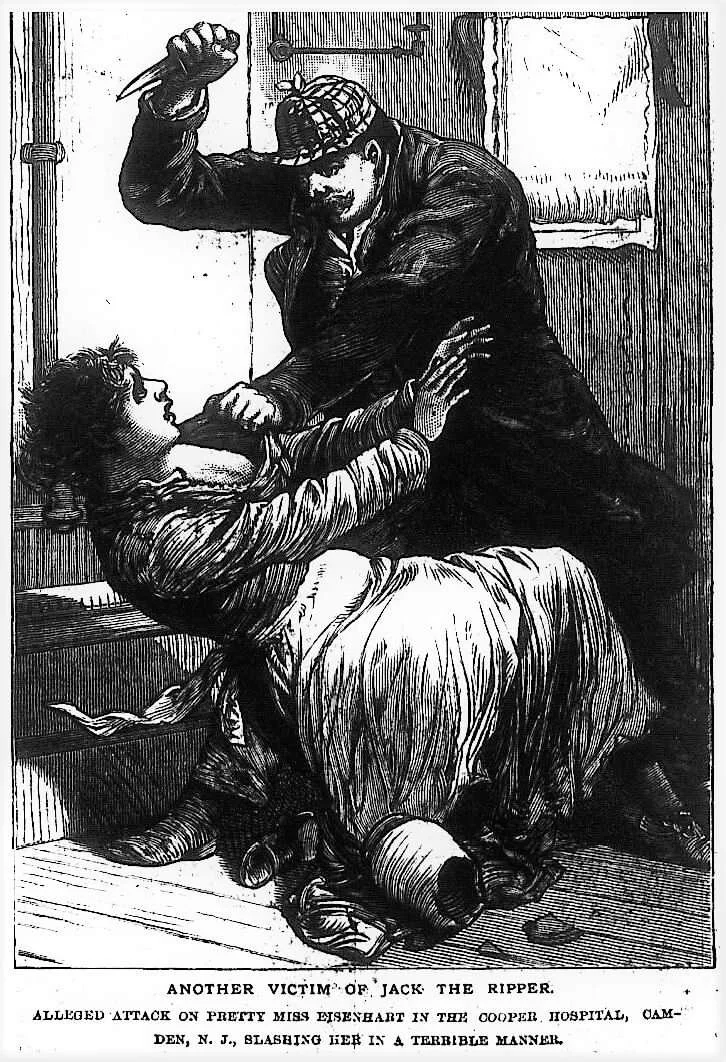
Jack the Ripper murdering a victim in London
How subtle changes in the crime scenes reveal more than just horror
When visitors join our Jack the Ripper tour in London, most expect chilling tales, fog, and mystery. Yet one of the most unusual aspects of the case is how the killer’s modus operandi (MO) and signature behaviours changed with each murder — revealing not only a calculated mind but also the realities of Victorian London’s East End policing.
From Panic to Precision
The murder spree began in August 1888 with the killing of Mary Ann Nichols, followed by Annie Chapman, Elizabeth Stride, Catherine Eddowes and finally Mary Jane Kelly. While at first glance the five “canonical” victims share many similarities (all women, all in or around Whitechapel, all killed at night) a detailed forensic-criminological review shows the killer was learning and refining his method.
Between August and November 1888, five women — Mary Ann Nichols, Annie Chapman, Elizabeth Stride, Catherine Eddowes, and Mary Jane Kelly — were murdered in Whitechapel, the heart of London’s East End. These crimes form the core of what modern historians and tour guides call the canonical five murders.
What’s striking is how the Jack the Ripper murders evolved over time. At first, the attacks happened outdoors, in dimly lit alleys. By the final killing of Mary Jane Kelly, the murderer had moved indoors, using privacy to prolong the act — a chilling shift that any visitor walking through today’s Whitechapel streets can still imagine.
Such progression shows a killer who was learning and adapting — altering his behaviour to exploit the fog, poor lighting, and maze-like alleys of Victorian London.
Why Jack the Ripper?
The nickname itself came from a letter signed “Jack the Ripper” sent to the Central News Agency in 1888. Whether authentic or a journalist’s invention, the name cemented the killer’s infamy and still fuels the fascination behind every Jack the Ripper walking tour today.
The Victims and the Streets They Walked
Each victim had her own story. They were women living in hardship, navigating the harsh realities of Victorian Whitechapel. Many of the same locations they once knew remain part of the modern landscape — narrow streets, lodging houses, and market corners that are now stops on many London Jack the Ripper tours.
When you join a guided night tour through Whitechapel, these places take on new meaning. They aren’t just scenes of tragedy — they’re part of a historical puzzle that changed how London understood crime, poverty, and the role of women in society.
The Killer’s Evolving Methods
Each crime scene revealed new refinements in the killer’s MO:
Early attacks showed hesitation and quick escapes.
Later crimes demonstrated confidence, control, and anatomical knowledge.
The final murder, committed indoors, showed a shift from risk to ritual.
Modern forensic analysts now describe this as a rare “evolving signature” — where a killer adapts his method of killing to both environment and emotion. This rare pattern has made Jack the Ripper one of history’s most studied serial killers.
Victorian Policing and Opportunity
The Metropolitan Police of the 1880s faced enormous challenges. There were no fingerprint records, no DNA testing, and little coordination between divisions. In that darkness, the killer had every advantage.
Every night on our Jack the Ripper Experience in London, guests see how these conditions shaped the murders. The narrow streets and shadows of Whitechapel were more than background — they were the killer’s perfect cover.
A Deeper Layer to the Story
Understanding how the Ripper’s methods changed gives visitors something beyond the usual headlines. It reveals a predator who adapted to his city — and a city that, in turn, shaped one of history’s greatest mysteries.
It also explains why the Jack the Ripper case continues to captivate true-crime fans, historians, and anyone walking through London after dark.
Conclusion: The Pattern Beyond the Infamy
The Jack the Ripper murders aren’t just a tale of horror; they’re a study in adaptation. The killer’s growing precision mirrored London’s own industrial transformation — ruthless, fast, and shrouded in smog.
For those exploring Whitechapel on a Jack the Ripper night tour, this insight transforms each stop from a simple retelling into a forensic journey through the evolution of a murderer’s mind.
So the next time you stand beneath a flickering streetlamp in London’s East End, remember: you’re walking the same ground where not only history was written, but where the killer’s deadly education took place.